Safari planners chasing the 2026 Great Migration are running into a problem the brochures do not mention. The herds have not read the calendar. Camps on the ground in the Masai Mara reported unusually heavy localized rain through late July 2026, and that rain has scattered wildebeest and zebra across a much wider stretch of the ecosystem than usual. Angama Mara, perched on the Oloololo Escarpment above the Mara Triangle, flagged the shift in a field dispatch on July 25. Herds that would normally be massing near the river were instead spread thin across green plains further from any crossing point. Touring Insights breaks down what is actually happening, why rain changes migration timing more than any other factor, and how to plan a trip when the usual “August is safe” advice no longer holds.
Why Rain Throws Off Migration Timing
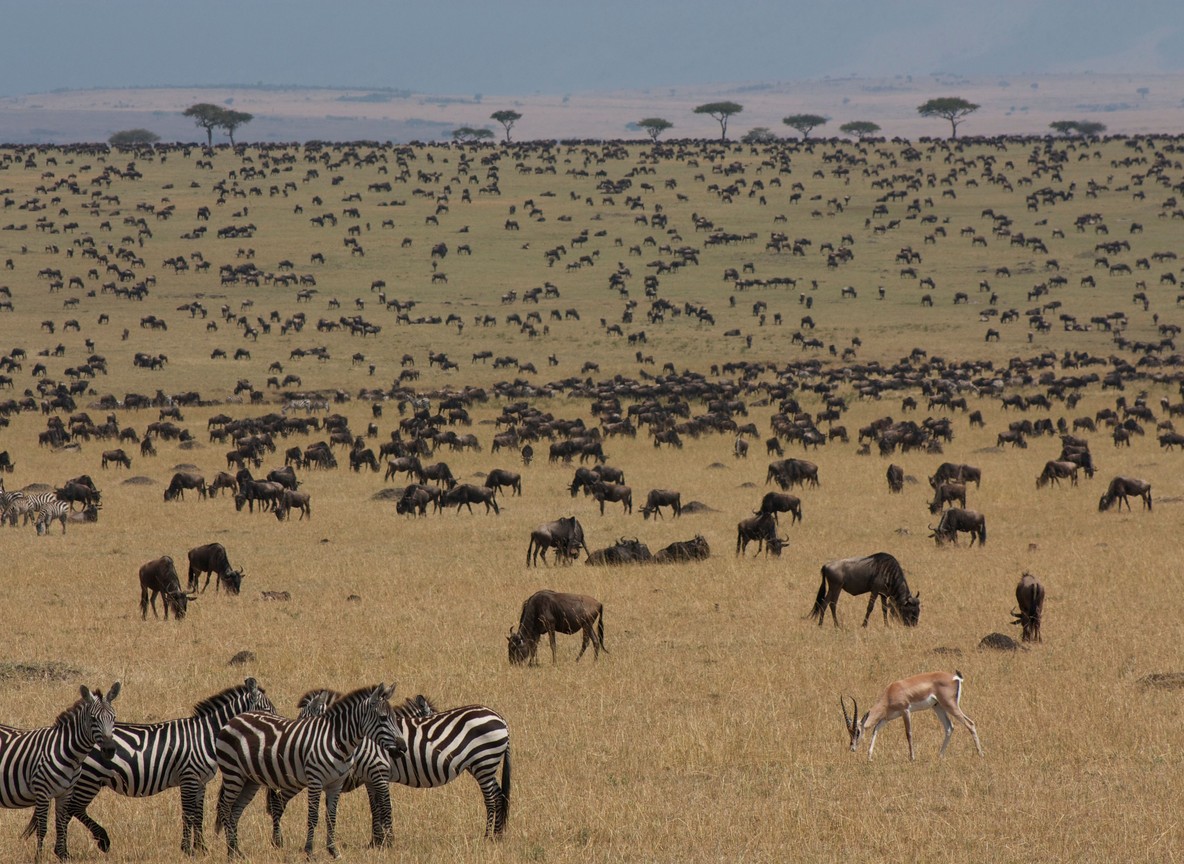
The Great Migration is not a scheduled event. It is around two million wildebeest and zebra following grass and water across the Serengeti-Mara ecosystem. When rain falls unevenly, grass grows unevenly too, and herds spread out to follow it instead of massing together. A concentrated herd is what triggers a river crossing, since crossings happen when pressure builds at a natural bottleneck like the Mara River. Scattered herds mean fewer bottlenecks and fewer crossings. Localized storms in one part of the reserve can green up plains that were dry a week earlier. That pulls animals away from the river corridor entirely. This is why camps talk about “the rains” as the single biggest wildcard in any migration forecast, well ahead of dates on a calendar.
What Camps Are Reporting This Year
Angama Mara’s July 25 dispatch described patchy, localized rain across the Mara Triangle and surrounding conservancies through the back half of the month. Herds that guides expected near the river by late July were instead reported well north and east of the usual crossing zone, grazing on plains greened up by the recent showers. Guides at several Mara Triangle camps echoed the pattern in the same window, noting smaller, looser groups rather than the dense columns that typically precede a crossing. None of this means the migration has stalled. It means the usual mid-to-late July build-up toward the river has been pushed back, and nobody on the ground is willing to name a firm date for the first major crossing this year.
2026 Timing vs a Typical Migration Year
The table below compares what a typical year looks like against what camps are reporting for 2026 so far.
| Stage | Typical year | 2026 so far |
|---|---|---|
| Herd position, late July | Massing near Sand River and Mara Triangle | Scattered across wider plains, pulled by patchy rain |
| First major river crossing | Late July to early August | Delayed, no confirmed date at time of writing |
| Herd density near river | High, building daily | Low to moderate, inconsistent by area |
| Grass condition away from river | Drying out, pushing herds toward water | Greener than usual in multiple zones |
| Camp guidance on booking | Book by crossing forecast | Book by flexible date range, not a fixed week |
Treat the 2026 column as a live snapshot rather than a fixed outcome. Herd behavior can shift within days once a dry spell resumes and grass away from the river starts to thin.
How This Changes Your Booking Strategy
A delayed build-up does not mean a lost migration season. It means the safe window has moved and widened. Camps that track herd movement daily, rather than relying on a fixed date, are the better bet this year. Book a flexible arrival window of four to five days rather than pinning a trip to one specific crossing date. Favor camps positioned to move guests toward wherever the herds actually are, not just camps sitting on a historically reliable crossing point. Mara Triangle camps near Lookout Hill and Paradise Plain, and Mara North and Olare Motorogi conservancy camps further north, all cover different sections of the herd’s possible spread this year. A guide with daily radio contact across camps is worth more in an unpredictable year than a fixed river-view tent.
Travel agents booking Mara trips this year should also build in a buffer day where possible. A single extra night at the end of a fixed itinerary can be the difference between missing a crossing entirely and catching one that finally comes together after a week of scattered sightings. Some camps will shift game drive routes daily based on radio reports from other properties, which only works if the camp network shares information openly. Ask directly whether your camp does this before you book, since not every property maintains the same level of cooperation with neighboring conservancies.
Masai Mara Planning Facts for 2026
| Detail | Figure |
|---|---|
| Masai Mara National Reserve size | approx. 1,510 km2 |
| Mara Triangle (Mara Conservancy) size | approx. 510 km2 |
| Distance, Nairobi to Masai Mara by road | approx. 270 km |
| Drive time, Nairobi to Mara | approx. 5-6 hours |
| Flight time, Wilson Airport to Mara airstrips | approx. 45 minutes |
| Airstrips serving the reserve | Keekorok, Musiara, Kichwa Tembo, Ol Kiombo |
| Narok County reserve entry fee, non-resident adult (indicative) | USD 100 per person per day |
| Mara Conservancy (Triangle) entry fee, non-resident adult (indicative) | USD 70-100 per person per day |
| Typical peak crossing window, past seasons | early August to late September |
| 2026 crossing status at time of writing | delayed, no confirmed date |
Confirm current park and conservancy fees directly with the reserve authority or your camp before booking, since rates are adjusted periodically.
What Happens if Rain Continues Through August
A run of storms into August would likely keep herds spread across a wider area for longer, pushing any major crossing later into the season. That is not unheard of. Some past seasons have seen the heaviest crossing activity run into September rather than August. The bigger risk for travelers is booking a single fixed date around a specific crossing point and finding the herds somewhere else entirely. Camps that operate across multiple conservancies, or that partner with sister camps in different zones, give you a better shot at reaching wherever the action actually is that week. If you already have fixed dates booked, ask your camp for a same-week update on herd position rather than relying on general seasonal averages.
Explorer Notes
Ask your camp for a rainfall update covering the two weeks before your arrival, not just a generic “migration season” answer. Guides read grass color from the vehicle every morning, and a good one can tell you within a day or two whether herds are tightening up near a crossing point or still spread thin.
Pack for both dry and wet game drives this year. A light rain jacket and a dry bag for camera gear matter more in a patchy-rain season than in a typical dry August. If your camp offers a mobile tented option that follows herd movement, ask about it directly. It is often the single best hedge against a delayed or scattered migration.
Do not chase a crossing at the expense of everything else the Mara offers. Resident lion prides, leopard sightings, and healthy cheetah numbers are there with or without a crossing, and a guide who knows that will build you a strong week regardless of where the herds have settled. Balloon safaris over the plains are also worth asking about in a scattered-herd year, since an aerial view covers far more ground in an hour than a vehicle can in a full morning.
What to Read Next
- Masai Mara Great Migration timing and crossing point guide
- Mara River wildebeest crossing forecast and probability windows
- Choosing a Mara camp for flexible, herd-following game drives
FAQ
Is the 2026 Great Migration canceled or failing this year? No. Herd numbers are not reduced. Rain has scattered the herds across a wider area and delayed the usual build-up toward the river, which pushes crossing timing later rather than removing it.
When will the first Mara River crossing happen in 2026? No firm date has been confirmed at the time of writing. Camps are watching herd density near the river week by week rather than naming a fixed crossing date this year.
Should I cancel or change my August 2026 Mara safari booking? Not necessarily. A trip built around a flexible multi-day window and a camp that tracks herd movement daily still gives you a strong chance at crossings and general migration wildlife.
Does rain affect the whole ecosystem the same way? No. Rain in East Africa is often highly localized. One conservancy can get heavy storms while another stays dry, which is exactly why herds have spread unevenly this year instead of moving as one block.
What should I ask my camp before booking around this uncertainty? Ask for a current herd position update, not a generic seasonal answer, and ask whether the camp can move you toward wherever the herds are that week rather than one fixed viewing area.
A migration season that will not commit to a calendar still rewards travelers who stay flexible on dates and pick a camp built to chase herd movement rather than wait for it. Check the Tour Packages page for current Mara availability, and talk to a partner operator directly about building a flexible-window itinerary around this year’s slower build-up.
Further reading
- Maasai Mara Wildlife Conservancies Association
- Magical Kenya (Kenya Tourism Board)
- African Wildlife Foundation